Leading with Vision w/ Arnaud Weyrich & Xavier Barlier, Roederer Estate
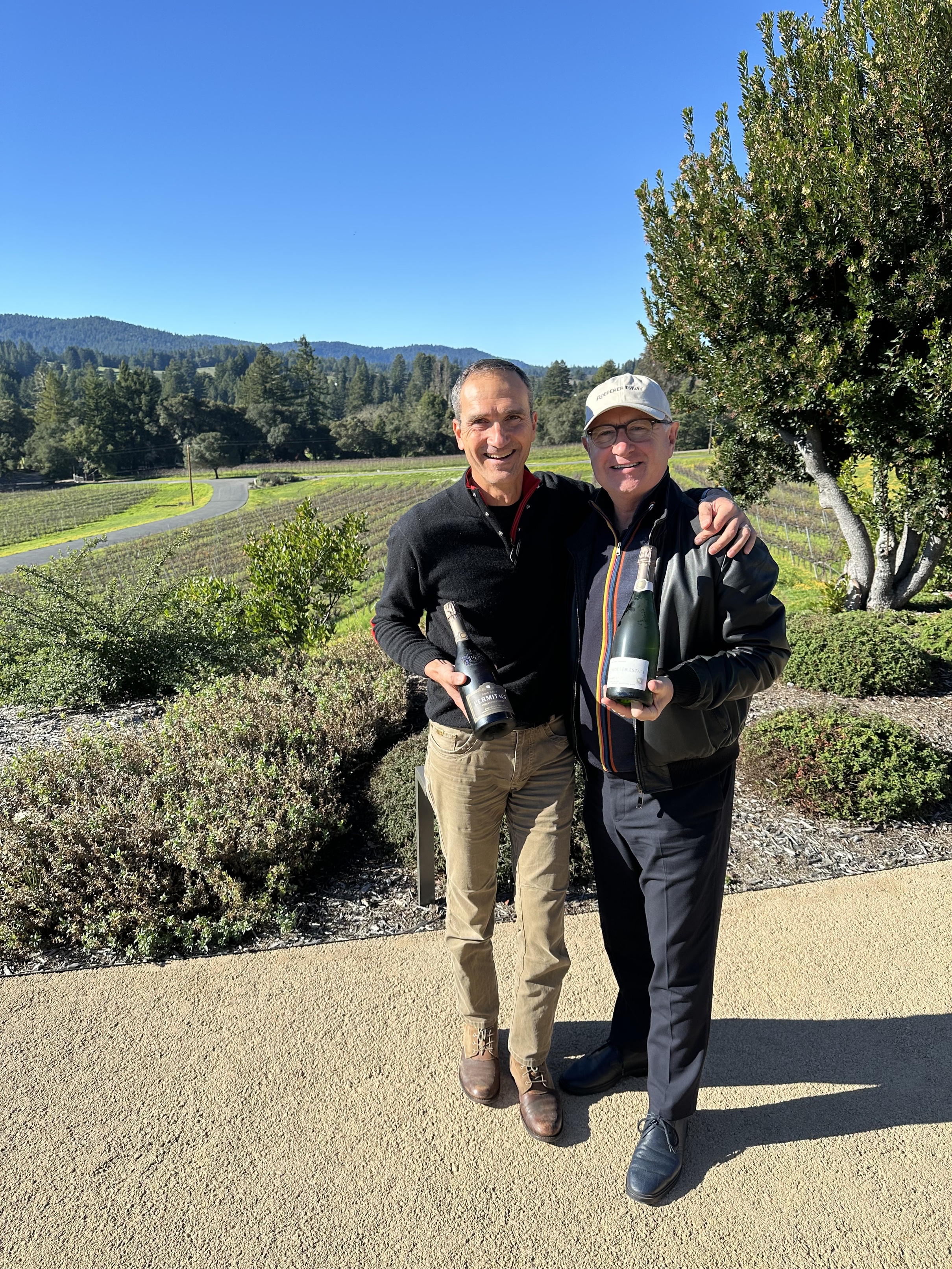


After 40 years, Roederer Estate, the Californian arm of Champagne Louis Roederer has really started to hit its stride. Arnaud Weyrich, SVP and Winemaker of Roederer Estate and Xavier Barlier, CMO of MMD USA, discuss its history, trajectory, and how Roederer Estate continues to create more reasons to believe in the brand and the wines. This belief is grounded in a vision to make wines that look and taste like Champagne, but with Californian roots.
Detailed Show Notes:
Arnaud’s background: interned at Roederer Estate (“RE”) in 1993, returned to winemaking team in 2000
Xavier’s background: Moet Hennessy, Renault, Disney, then Roederer Marketing & Communications
Roederer Estate in context
- Louis Roederer founded in 1776, began exporting to US in 1860-70’s
- 1980s - acquired Anderson Valley vineyards and built Roederer Estate winery
- Maison Marques & Domaines (“MMD”) founded 1987 for launch of 1st vintage of RE and distribution of Louis Roederer
- RE founded because during 1980s, not enough Champagne made to supply growing US market and land was cheaper than France; could also do the estate model, which was difficult in Champagne
- Anderson Valley had the right weather, track record of other quality, local wines (Chardonnay, Riesling, Gewurztraminer), and inexpensive land (was known for apple orchards)
RE production
- 1st harvest 1985 (80s challenged by legal problems for wine w/ sulfite content)
- Late 80s-early 90s - 40-45k cases
- Mid-90’s-2000 - ~80k cases (bolstered by French paradox, internet boom, young chefs, and “sommelier” becoming an English word)
- 2025 - ~100k cases
- Limited by estate model, remote part of CA (tries to attract talent by providing subsidized housing for 90% of staff, invested $3M over last 10 years)
CA sparkling history
- Pioneers supported each other (e.g. - Schramsberg, Domaine Carneros, Iron Horse)
- Downturn in market (1987 stock market crash, 1989 phylloxera hit vineyards)
- Market reaction positive, particularly after Schramberg wine served by President Nixon in China at the 1972 “Toast to Peace”
RE launch pricing
- Champagne was priced <$10/bottle in 1980’s, created glass ceiling for CA sparkling
- RE priced $2-5 below Champagne
- RE always wanted to look and taste like Champagne (used same varieties, techniques, including reserve wine)
Accolades helped establish a “reason to believe” for consumers
- RE awarded Wine Spectator Top 100 12x since 1998 (#5 in 2019, #20 in 2024)
- Roederer philosophy to do “as little marketing as possible”
- 2 types of marketing: 1) consumer focused, doing focus groups and market studies; 2) invisible marketing (e.g. - Steve Jobs), start w/ vision and dream (i.e. - be storytellers)
- RE is more product driven, not market driven; winemaking makes the wine, marketing tells the story
Keeping the brand fresh after 40 years
- Continue adding reasons to believe for RE
- As more is learnt about estate, launching new wines - Rose, L’ermitage (vintage, 1989), L’ermitage Rose (1999), Single Vineyards (2020)
- Single vineyards stem from 600 acres / 100 lots of wine every year; like grower wines in Champagne; wine geeks and sommeliers love it; intimate launch (mostly DTC, some on-premise to create buzz and interest)
- Create a community (e.g. - Arnaud often in market for tastings), turn consumers into clients and then into fans that tell the brand story to others
Price of NV Brut has increased from ~$23 to $30 from 2016-2025
- Be honest, transparent w/ wholesalers (e.g. - labor cost, cost of farming, materials), and give time for changes to work through 3-tier system
- Need accolades and marketing to support the idea that the wine is worth the price (“price fluctuates, value endures”)
Hosted on Acast. See acast.com/privacy for more information.



